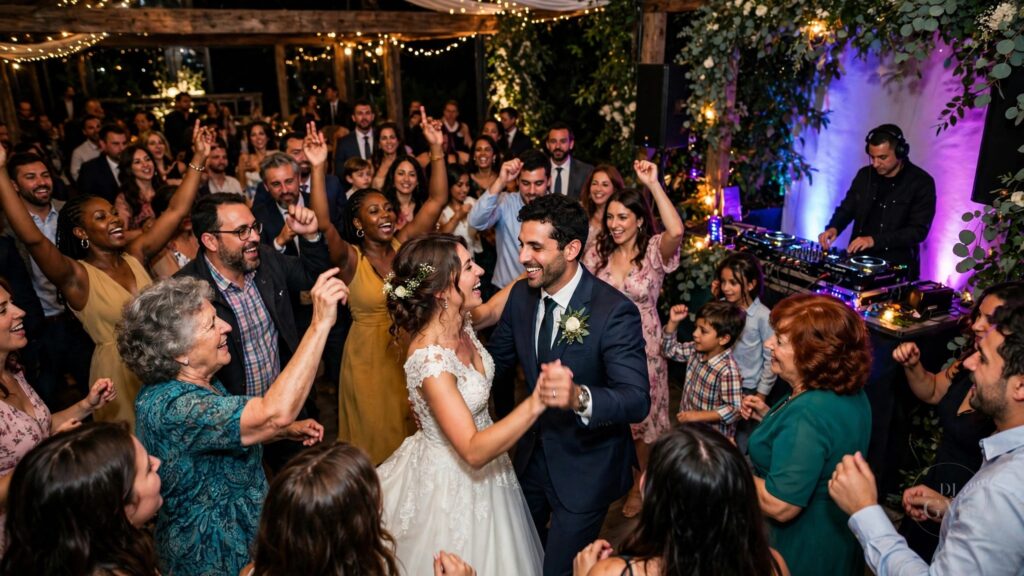
A reception doesn’t lose energy because the music is bad. It loses energy because the pacing is off — too much sitting, too many gaps between moments, a dance floor that opens too early or too late.
Here’s the order that tends to actually work, and why.
Grand entrance → welcome, not a speech
Keep it short. This is an energy spike, not a formal announcement. Save the longer talking for toasts.
Dinner before the heavy formalities
Let people eat before you stack toasts, parent dances, and cake cutting back to back. Hungry guests are distracted guests.
Toasts in one block, not scattered
Group your toasts together right after dinner starts winding down. Spreading them across the night kills momentum every time they interrupt the floor.
Open the floor while energy is still high
Don’t wait too long after dinner to open the dance floor. The longer guests sit, the harder it is to get them back up.
Cake cutting mid-party, not at the end
Cutting the cake late in the night usually means half your guests have already left. Do it while the room is still full.
Build in slack
Real receptions run behind. A good timeline has 10–15 minutes of built-in cushion so a slow catering team or a long toast doesn’t throw off the whole night.
Every wedding is different, and your venue or planner may have their own house rhythm. If you’re planning in Philadelphia, the Main Line, Delaware County, Montgomery County, Chester County, South Jersey, or Wilmington, Delaware, and want help mapping this to your actual day, that’s a conversation worth having early.